Hearing Protection
NHCA Offers NRR Recommendations to EPA
In response to the impending changes to the Noise Reduction Rating (NRR) for hearing protection devices, the National Hearing Conservation Association (NHCA) provided recommendations to EPA to improve the utility of hearing protection devices for occupational hearing conservation programs and for personal use...
AIHA Comments on Hearing Protector Labeling
The American Industrial Hygiene Association has released the comments it made to EPA about 40CFR211 Subpart B, Hearing Protector Labeling, a proposed rule published in the Aug. 5 Federal Register that would de-emphasize the single number rating given to hearing protection devices...
National Hearing Conservation Association Petitions OSHA to Lower Permissible Exposure Limits for Noise
Citing the fact that nearly 22 million American workers are exposed to hazardous noise on a daily basis and that occupational hearing loss continues to plague industry, the National Hearing Conservation Association (NHCA) has made a request to OSHA to reduce the permissible exposure limit (PEL) for noise exposures...
HSE Busts Myth that Concertgoers Need Earplugs
The Health and Safety Executive (HSE), the agency in the U.K. that regulates occupational safety and health, has moved to silence critics claiming HSE requires audiences to wear earplugs when attending noisy concerts and music festivals...
Review Suggests Weak Support for Workplace Hearing Loss Programs
A new review of existing research claims there is little evidence to support mandatory hearing-loss prevention programs at the workplace and suggests that workers could simply wear earplugs or other devices that protect hearing...
Hearing Protectors 2009: Rating, Evaluation and the NRR
The EPA has decided to update the rule that governs noise reduction ratings - how will these changes impact hearing protection devices? ...
AIHA Asks OSHA to Lower Noise Exposure PEL
American Industrial Hygiene Association (AIHA) President Lindsay E. Booher sent a letter to OSHA Acting Assistant Secretary Jordan Barab asking OSHA to lower the Permissible Exposure Limit (PEL) for occupational noise...
New Web Site Offers Resources for NRR Changes
As EPA works to better align Noise Reduction Ratings (NRR) with real-world use of hearing protection, a number of proposed changes to testing, labeling and regulations are underway. The new Web site http://www.NRRUpdate.com provides the latest regulatory updates, expert insights and resources for implementing these new regulations into the workplace. ...
NRR: Now Really Relevant
For over 30 years, the U.S. Environmental Protection Agency (EPA) has used the noise reduction rating (NRR) to measure the attenuation of hearing protector...
Encourage Employees To Take Earplugs Home
OSHA requires employers to provide hearing protection for workers exposed to hazardous noise, and best practice has shown that providing a good variety of hearing protectors improves compliance. But smart employers also will encourage employees to take hearing protectors home, according to Theresa Y. Schulz, Ph.D., hearing conservation manager for Howard Leight....
ASCC Releases National Survey On Exposure To Workplace Hazards
On Dec. 3, the Australian Safety and Compensation Council (ASCC) released the National Hazard Exposure Worker Surveillance (NHEWS) survey – 2008 Results, the first national survey on exposure to occupational disease hazards in Australia....
PPE Management: What Trainers Need to Know About Fitting Earplugs
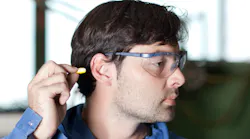
There are many ways workers learn how to wear earplugs - in safety briefings, group training sessions or in an introduction to a job site. Too often,...
EAR Hearing Conservation Seminar
E-A-R and Peltor Brandsoffer this hearing conservation seminar to educate staff about the current regulations, equipment choices, employee training programs...
CCOHS Introduces E-Course for Hearing Loss Prevention
The Preventing Hearing Loss from Workplace Noise e-course is an introduction to noise control, and focuses on how to prevent hearing loss by reducing...
NYC Code Provides the Sound of Things to Come
Noise complaints are the number one quality of life issue for New York City residents. On July 1, 2007, major revisions to the citys 30-year-old noise...
Can You Hear Me Now? The Impacts of Hearing Loss
As a hearing conservationist, National Hearing Conservation Association (NHCA) President Theresa Schulz has heard more than her share of heartbreaking...
Best Practices Make Better Hearing Conservation Programs
Implementing an OSHA-approved hearing conservation program is not as daunting as it seems, says Bessette, who also is a marketing manager for Sperian...
Going Beyond the Minimum with Hearing Conservation
Even after many years of OSHA-regulated efforts to conserve hearing, and despite the ready availability of hearing protection devices (HPDs), rates of...
Study: Lack of Hearing Protection Increases Injury Risk for Farmers
The study, led by Dr. Nancy Sprince, an occupational and environmental health professor with the University of Iowa College of Public Health, showed that...
Airing on the Side of Caution
To encourage workers to wear their hearing protection, Atlanta-based Delta Air Lines has found that its good to keep things personal. Belinda Hall, for...
Is Riding the NYC Subway Hazardous to Commuters' Hearing?
Researchers at Columbia University's Mailman School of Public Health found that New York subway noise levels can go as high as 106 decibels, which exceeds...
Noise Control: It's More than Just Earplugs
An OSHA inspection at an Atlanta steel mill resulted in a citation for failure to reduce sound levels that could damage employees' hearing. The noise...
Hearing Conservation: It's Not Just for the Workplace Anymore
In the 20-plus years since OSHA implemented detailed noise exposure regulations (29 CFR 1910.95), diligent employers and safety professionals have monitored...
Six Sigma Roadmap for Noise Exposure Analysis
Using Six Sigma methodology, a company is able to move from a blanket hearing conservation program to one targeted on actual exposures...
OSHA Tackles Hearing Conservation in Construction
For years, the federal government and many safety and health groups have recognized that noise-induced hearing loss among construction workers is far...