Q&A with Future Leader in EHS Jeffrey R. Walls
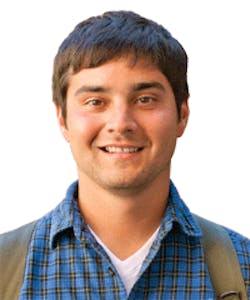
EHS Today: Congratulations on being named the 2011 Future Leader in EHS! First, tell us a bit about yourself – how did you get involved with EHS, and why did you choose to study at the University of Washington?
My interested in EHS sparked while studying abroad in Ecuador during my third year as an undergraduate. At the time I was pursuing a career in conservation biology, and had always been interested in how human activity leads to degraded environments that affect the health of ecosystems. While in Ecuador I had to opportunity to see how human health is impacted by such environments, particularly hazardous workplace environments. It was during this time that I decided that I found the negative impact on our own species a much more compelling problem to address. It was this decision that ultimately led to me pursuing a career in EHS.
I choose to continue my education at the University of Washington because of the reputation of UW School of Public Health. I had the opportunity to speak with graduates of the Masters of Science in Industrial Hygiene program and could tell that the experience had adequately prepared them for a successful career in EHS. Additionally, I was attracted to the research being conducted within the department, particularly projects that focused on environmental justice issues and workplace exposures in marginalized worker populations.
EHS Today: You spent three years working as a crew leader and project supervisor for a hazmat remediation team, where many of the workers were immigrants from Latin America. What did this experience teach you about safety culture and marginalized workers, and how did it shape your approach to the EHS world?
I was given the opportunity to assume supervisory roles on the hazmat team primarily because I was bilingual and college educated. From management's point of view, I was often the most convenient choice for the lead role because they could give me direction and rely on my ability to communicate expectations to the rest of the team. Early on I found this situation uncomfortable. I often found myself performing a job for the first time, directing men and women who had been doing the work for years. Many times I would have to humble myself by telling my crew what we were going to do, and then having them show me how to do it. Hazmat teams place a great deal of importance on chain-of-command, so at the end of the day I was in charge and could count on the team following my lead without much dissent.
My early experiences as a crew leader taught me that most workers are very concerned about their health and safety, but at the end of the day they are more concerned about not causing too much trouble and keeping their jobs in order to support their families. This realization reinforced two points have shaped my approach to the practice of EHS today. First, those in charge (management, supervisors, crew leads) should take responsibility for the health and safety of their workers, take that responsibility seriously and protect them to the best of their ability. Second, workers should be empowered to be active players towards achieving safe work environments and to stand up for their health and workplace rights, without fear of repercussions.
EHS Today: Following the catastrophic earthquake that hit Chile in 2010, you traveled to Santiago as a disaster restoration worker. How would you describe this experience? Was there one defining moment from this job that sticks with you today?
My experience in Chile was exciting, challenging, at times disorienting, but mostly chaotic. There is one experience that I can say is probably the most defining moment of my career so far.
I went to Chile to work as the member of a U.S.-based asbestos remediation crew that had been assigned to plastic-rap the roof of a damaged document storage facility before the arrival of the rainy season, which was rapidly approaching. During the first week of the job, one of my coworkers stepped on an unsupported section of the roof and fell through towards the floor 40 feet below. Due to delays in shipping, we were directed to work on the roof with all the necessary fall protection equipment, with the exception of temporary anchor tie-off points. When I saw his lifeline running through the hole in the roof I was sure that he would be lucky to be alive, and would sustain life-changing injuries at best. Miraculously, he landed on a pile of toppled boxes and escaped with only minor injuries. This incident was by far the most serious near miss I have ever witnessed, and to this day I cannot help but feel partially responsible. While I was not his direct supervisor at the time of the incident, he was used to looking for me to direction and I was working side-by-side with him under the same work conditions.
I knew that what we were doing was dangerous before the accident occurred. I also knew, however, that if I refused to work I would be sent back to the United States. I made the choice to go ahead with the job and hope for the best, a collective decision that could have cost my coworker his life. In my mind this experience reinforced the power of every worker's right to stop the job, and the responsibility that every worker has to do so when a hazardous situation is recognized.
EHS Today: In your application, you mention how a growing number of contingent workers will pose challenges to workplace health and safety. Why might these workers particularly be at risk, and what solutions would you suggest to ensure they are protected?
Contingent, temporary and contracted employees are at risk for a number of reasons. Contingent workers are more likely to come from underrepresented populations are more likely to engage in hazardous occupations. Many of these workers receive less training and are less familiar with their work environments than their full-time counterparts. Additionally, due to loopholes in labor laws, the responsibility of protecting the health and safety of contingent workers is often not a priority for the employer directing their actions at the work site.
The challenges and solutions surrounding these issues are complicated, and are not easily articulated in a short Q&A. Generally, I feel that there should be a reform in U.S. labor laws to provide better protection for contingent and contract workers. Additionally, I would hope that organizations would assume greater responsibility for all workers involved in their operations, regardless of employment status.
EHS Today: What advice can you offer other students who may be interested in pursuing a career in EHS?
If you are thinking about pursuing a graduate degree in EHS I would recommend taking time to gain “real-world” work experience. Having a practical understanding of workplace health and safety issues can only benefit you in your job search and academic focus (not to mention give you more credibility with the workers you will eventually be in charge of protecting).
EHS Today: What do you enjoy doing when you're not at work or school? Can you share an interesting or fun fact about yourself that is unrelated to EHS?
When I'm not working or studying I enjoy running, hiking and traveling. One fun fact about me is that I have climbed the highest active volcano in the world.
EHS Today: Finally, what does winning this scholarship mean to you, and how do you expect it might impact your EHS studies and future plans?
I am very grateful for being selected as the 2011 Future Leader, and would like to thank the committee for awarding me this honor. I am excited by the opportunity of being on the EHS Today editorial advisory board and being able to present my school with access to PureSafety's health and safety software. Funding is an ever-present challenge for graduate students, so this scholarship will also allow me to meet my tuition requirements and focus on my studies.
EHS Today: Thanks, Jeff, and congratulations again on being named our 2011 Future Leader in EHS. It's well-deserved!
For more information about the Future Leaders in EHS program, visit the Future Leaders page or read the December 2011 feature about Walls.
About the Author

Laura Walter
Laura Walter was formerly senior editor of EHS Today. She is a subject matter expert in EHS compliance and government issues and has covered a variety of topics relating to occupational safety and health. Her writing has earned awards from the American Society of Business Publication Editors (ASBPE), the Trade Association Business Publications International (TABPI) and APEX Awards for Publication Excellence. Her debut novel, Body of Stars (Dutton) was published in 2021.