On-the-Job Stress Negatively Impacts Police Officer Health, Study Suggests
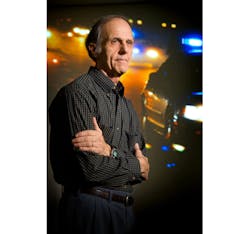
In the line of duty, police officers face more than public safety concerns: They also face stress, which can negatively impact their physical and mental health, according to researchers at the University of Buffalo (UB).
The Buffalo Cardio-Metabolic Occupational Police Stress (BCOPS) study was conducted over a 5-year period to examine the effects of stress on 464 members of the Buffalo Police Department. The findings reveal that police officers experience daily psychological stress that puts them at an increased risk of various long-term health effects that may include cardiovascular disease, obesity, suicide, sleeplessness and cancer.
“Usually, health disparities are defined by socioeconomic and ethnic factors, but here you have a health disparity caused by an occupation,” said John Violanti, Ph.D., professor of social and preventive medicine in the UB School of Public Health and Health Professions, and principal investigator on the study.
The study was prompted by the assumption that the high demands, danger and exposure to human misery and death that police officers experience on the job contribute to an increased risk of cardiovascular disease and other chronic health outcomes.
Key study findings include:
- 40 percent of the officers were obese, compared with 32 percent of the general population.
- More than 25 percent of the officers had metabolic syndrome, a cluster of symptoms believed to increase the risk of heart disease, stroke and diabetes, versus 18.7 percent of the general population.
- Officers who worked night shifts had a higher risk of metabolic syndrome than those who work day shifts. Nearly half (46.9 percent) of officers in the study worked a non-day shift compared to just 9 percent of U.S. workers.
- Female and male officers experiencing the highest level of self-reported stress were four and six times more likely to have poor sleep quality, respectively.
- Officers were at increased risk of developing Hodgkin’s lymphoma and brain cancer after 30 years of service.
- Suicide rates were more than eight times higher in working officers than they were in officers who had retired or left the police force.
An Unhealthy Culture
Violanti pointed out that the culture of police work often goes against the goal of improving health. He said police officers are expected to be “superhuman” but also tend to fear asking for help. Officers who reveal that they suffer from chronic diseases or health problems may lose financial status, professional reputation or both, he added.
“If you have heart disease, you may not be allowed to go back on the street,” Violanti said. “That’s a real threat. If you go for mental health counseling, you may not be considered for promotions, and you may be shamed by your peers and superiors. In some cases, your gun can be taken away, so there is a real fear of going for help.”
The answer, Violanti said, is to change the training of officers in police academy so they understand signs of stress and how to get them treated.
“Police recruits need to receive inoculation training against stress,” he explained. “If I tell you that the first time you see a dead body or an abused child that it is normal to have feelings of stress, you will be better able to deal with them; exposure to this type of training inoculates you so that when it does happen, you will be better prepared. At the same time, middle and upper management in police departments need to be trained in how to accept officers who ask for help and how to make sure that officers are not afraid to ask for that help.”
The BCOPS study is based on extensive and rigorous medical testing and integrates a broad range of psychological, physiological and subclinical measures of stress, allowing for correlations between on-the-job stress and stress biomarkers that reveal the potential for adverse mental and physical health outcomes.
The study was funded by the National Institutes of Health and published in a special issue of the International Journal of Emergency Mental Health.
About the Author

Laura Walter
Laura Walter was formerly senior editor of EHS Today. She is a subject matter expert in EHS compliance and government issues and has covered a variety of topics relating to occupational safety and health. Her writing has earned awards from the American Society of Business Publication Editors (ASBPE), the Trade Association Business Publications International (TABPI) and APEX Awards for Publication Excellence. Her debut novel, Body of Stars (Dutton) was published in 2021.